
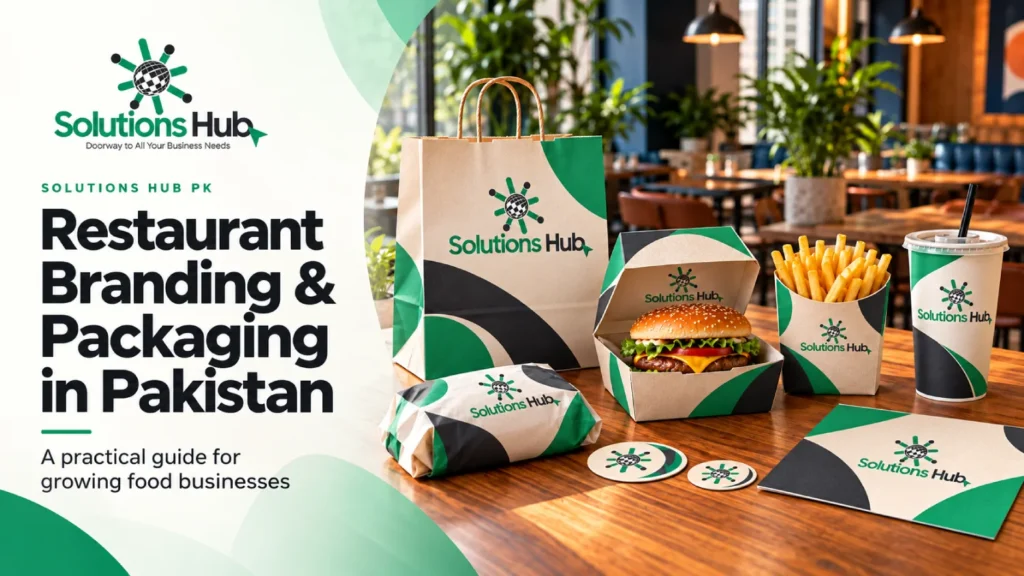
A customer may discover your restaurant on Instagram, order through WhatsApp, or notice your sign while passing by. Each place gives them a small impression of your brand. If the menu, food box, bag and storefront all look unrelated, customers have a harder time remembering who served them.
Restaurant branding is the visual system that connects those moments. It includes your logo, colours, typography, packaging, printed material and signage. You do not need to order everything on day one. You do need a plan so that each new item looks like it belongs to the same restaurant.
Start with the customer experience
Think about how people buy from you. A dine in café may need a readable menu and an inviting storefront first. A delivery focused kitchen may get more value from strong takeaway packaging and a simple insert that helps customers find it again. A food stall may need signage that can be understood quickly from a distance.
Write down the main customer touchpoints before choosing print products. This prevents spending most of the budget on items customers rarely see.
Build a simple brand system
Choose a logo that remains clear at small sizes, two or three main colours and one or two easy to read fonts. Prepare versions of the logo for light and dark backgrounds. Keep the business name, phone number and social handles consistent wherever they appear.
A logo alone is not a complete brand identity. The same colours, spacing and tone should appear on your menu, food packaging and storefront. This consistency helps customers recognise a takeaway order even before they read the name.
Choose packaging for the food first
A burger box, dessert container and hot meal bag have different jobs. Before approving a design, ask whether the material suits the food, whether the lid stays secure and whether the printed area will remain visible after the box is assembled. Test a physical sample with an actual order if possible.
For a new business, a plain suitable container with a branded sticker or sleeve can be a practical starting point. As order volume grows, compare that approach with fully printed packaging. Check minimum order quantity, unit cost and storage space before committing to a large run.
Make your menu easy to use
Good menu design helps customers decide. Group similar items, make item names and prices clear, and keep descriptions short. If prices change often, consider a format that is easy to update. Check readability on a phone as well as on printed material.
Avoid crowding every available space with offers. Your best selling items and main categories should be easy to find at a glance.
Give signage a clear job
A storefront sign should help someone identify the business from the street. It needs the business name, a readable visual style and enough contrast for the location. Interior signs can guide people to ordering, pickup or seating areas. Check the actual viewing distance and lighting before approving production.
A sensible order for a new restaurant
- Finalise the name, logo and brand colours.
- Design the main menu and storefront sign.
- Select food safe packaging that suits the product.
- Add branded stickers, sleeves, bags or boxes based on order volume.
- Review the complete experience with a real customer order.
Branding works best when every piece supports the way customers actually buy. Solutions Hub PK can help you plan coordinated restaurant branding, packaging and print materials. Share your restaurant type and the items you need to get a suitable quote.
Frequently asked questions
What should a small restaurant brand first? Start with a readable menu, visible sign and the packaging customers see most often. Add other items as demand grows.
Should I choose custom boxes or stickers? Compare order volume, budget and storage. Stickers can suit smaller runs, while custom boxes may make sense when specifications and quantities are stable.
What files should I prepare for printing? Ask your printer for the required dimensions, bleed, colour settings and file format before sending the final artwork.